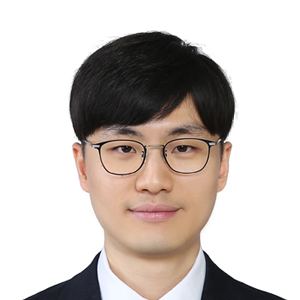
Byounghwa Lee
Senior Researcher, Electronics and Telecommunications Research Institute (ETRI)
Integrated Intelligence Research Section · Daejeon, Republic of Korea
I am a Senior Researcher at the Electronics and Telecommunications Research Institute (ETRI). I received my B.S. (2012) and Ph.D. (2019) in physics from Pohang University of Science and Technology (POSTECH), where my doctoral work addressed the statistical physics of complex systems. Before joining ETRI in 2021, I was a Staff Engineer at Samsung Research, Samsung Electronics.
I work on machine learning for scientific, clinical and industrial data, drawing on statistical physics and complex systems. My research asks how the structure of a system, the timing of its events, the relations among its parts and the modalities in which it is observed, can be turned into models that predict, generate and explain. My current work develops science-specialized encoders and tokenizers, with applications to drug discovery.
- AI for science and complex systems
- Graph learning and constrained generation
- Event-sequence learning
- Multimodal cognitive assessment
Research highlights
-
Multimodal cognitive assessment from images, language and speech
Two first- and corresponding-author papers in Scientific Reports (2025) on Alzheimer's disease recognition from picture-description speech, combining graph models of image–sentence relations with text and audio. The method is covered by a granted Korean patent. The same line of work led to a Korean speech-based MCI screening model, which I developed as primary developer and which was deployed in the field and transferred to two companies in 2026.
-
From bursty dynamics to neural event-sequence models
Physics-based generative models of bursty dynamics (Physical Review E, 2018 and 2019) led to the Burst and Memory-aware Transformer (2023), which tests when explicit temporal structure improves event-time prediction.
-
From street networks to graph generation under constraints
Complex-network analysis of the street networks of 22 Korean cities (Physica A, 2018) led to a granted Korean patent on generating networks under complex-network constraints, and to ongoing work on generating and editing graphs under several structural constraints at once.
Selected publications
- Multimodal Alzheimer's disease recognition from image, text and audio
- Alzheimer's disease recognition using graph neural network by leveraging image-text similarity from vision language model
- Burst and Memory-aware Transformer: capturing temporal heterogeneity
Contact
Google Scholar · ORCID · GitHub · LinkedIn · OpenReview